


Your AI and Semiconductor Strategy Is Incomplete Without Geopolitical Risk Analysis
- Jul 10, 2025
- 2 min read
Updated: Jul 13, 2025
Technology doesn’t exist in a vacuum. It lives in the real world — where governments compete, alliances shift, and power dynamics change overnight. If you think your AI or semiconductor strategy is just about innovation, scale, or efficiency, you're missing the most important piece: geopolitical risk.
And as we’ve learned repeatedly throughout history, the best technology doesn’t always win — the most strategically positioned one does.
1. Technology Is No Longer Just Business — It’s Power
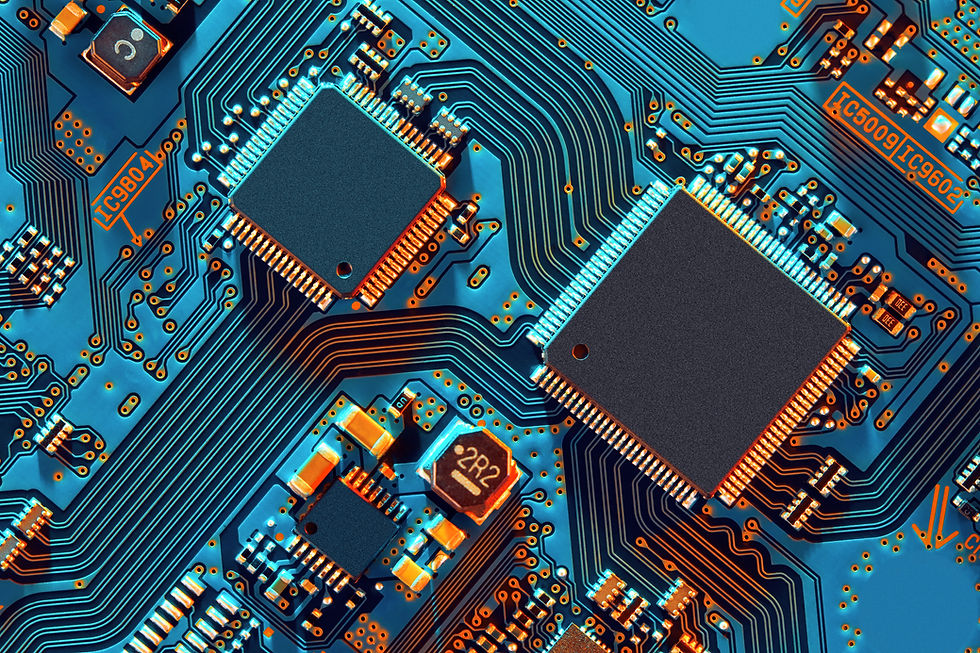
Once upon a time, semiconductors were a business input — like steel or oil. Now, they’re treated like nuclear material. Why? Because they power not just smartphones and data centers, but also intelligence agencies, militaries, and critical infrastructure.
The same applies to artificial intelligence. It's no longer just a productivity tool, it's a weapon in information warfare, surveillance, cyber conflict, and economic influence.
This shift means tech strategies must now consider political influence, national security, and global alliances — not just product roadmaps and margins.
2. Supply Chains Aren’t Neutral Anymore
Globalization worked when everyone played by the same rules. But now? Supply chains are strategic vulnerabilities. Countries are placing export controls, reshoring production, and building “tech alliances” — not for cost-efficiency, but for control.
Companies that still rely on single-source regions — especially in politically sensitive areas — are betting their futures on geopolitical stability that may not exist.
A resilient strategy now means building redundancy, sovereignty, and strategic optionality.
3. Geopolitical Risk Is Now a Core Business Risk
Ignoring geopolitics is no longer just a blind spot — it’s a liability. Executive teams need to treat it the way they treat cybersecurity, regulatory risk, or capital allocation.
That means:
Monitoring political shifts, elections, sanctions, military tensions, and tech policies in key regions.
Scenario planning for what happens if access to critical markets, components, or technologies is lost overnight.
Diversifying talent, data, and infrastructure in a way that doesn't leave you hostage to one country’s laws or conflicts.
Geopolitical due diligence is now as important as technical due diligence.
4. Great Technology Without Strategic Positioning Is Just an Academic Exercise
You can have the best chip design or AI model in the world — but if you’re locked out of the market, cut off from fabs, or banned from export, it’s worthless.
On the flip side, less advanced nations that align themselves smartly, build diplomatic leverage, and control supply chokepoints (like rare earths or key IP) may outmaneuver more advanced rivals.
In a world where politics can override economics, positioning beats perfection.
5. The Smart Money Plans for the Worst — and Wins Through It
The world is entering a phase of uncertainty — and that won’t change soon. Companies and countries that thrive will be those that:
Think long-term
Prepare for disruption
Stay rational when others panic
Build trust, independence, and resilience
If your strategy requires a peaceful, stable, and open world to succeed — it’s not a strategy. It’s a hope.
Final Takeaway
In the next decade, the leaders in AI and semiconductors will not just be the ones with the best technology — but the ones who navigate power, politics, and pressure better than anyone else.


Hi) Innovation alone isn’t enough. Companies must now treat geopolitical risk as a core part of their strategy, especially in AI and semiconductors. Without it, even the most advanced tech can be rendered useless. This reminds me of a case I read recently — check out this Real trader SignalCLI review for an interesting take on navigating uncertainty in the trading world too. The parallels are striking.